ECG monitoring
for intensive care.
ECG monitoring is one of the basic vital sign measurements carried out in hospital intensive care units. The sensor setup has to stay on the patient's body often for weeks, gets unplugged, cleaned and is part of many daily routines of healthcare professionals. Our goal was to dive deep into this specific context and come up with a conceptual solution that improves ECG monitoring for both patients and medical experts.
Role
Industrial Design
Prototyping
Focus
Medical Design
Usability
Awards
IF Design Talent 2021
Red Dot 2021
Core77 Runner Up 2021
The problem
The current setup.
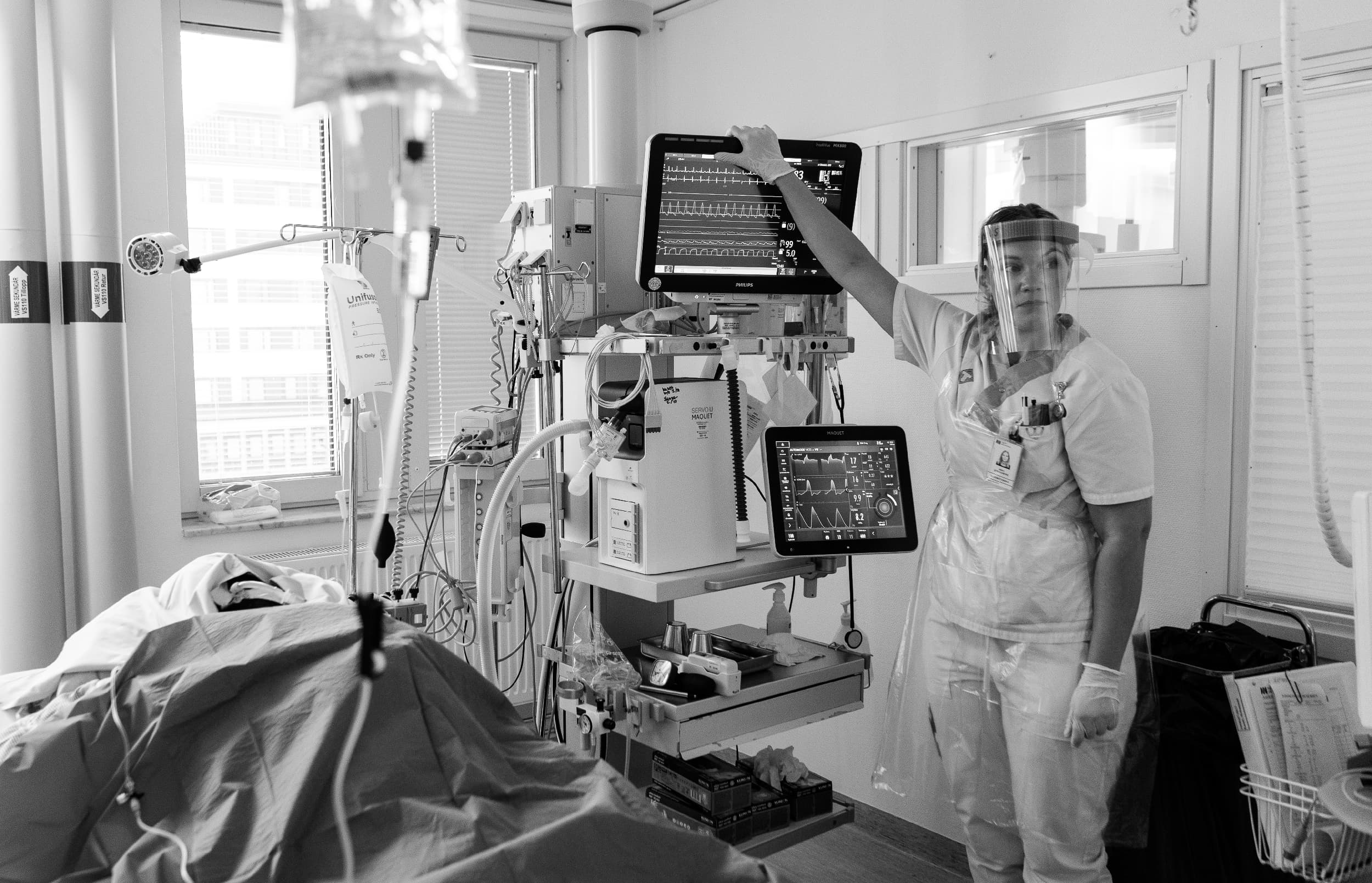
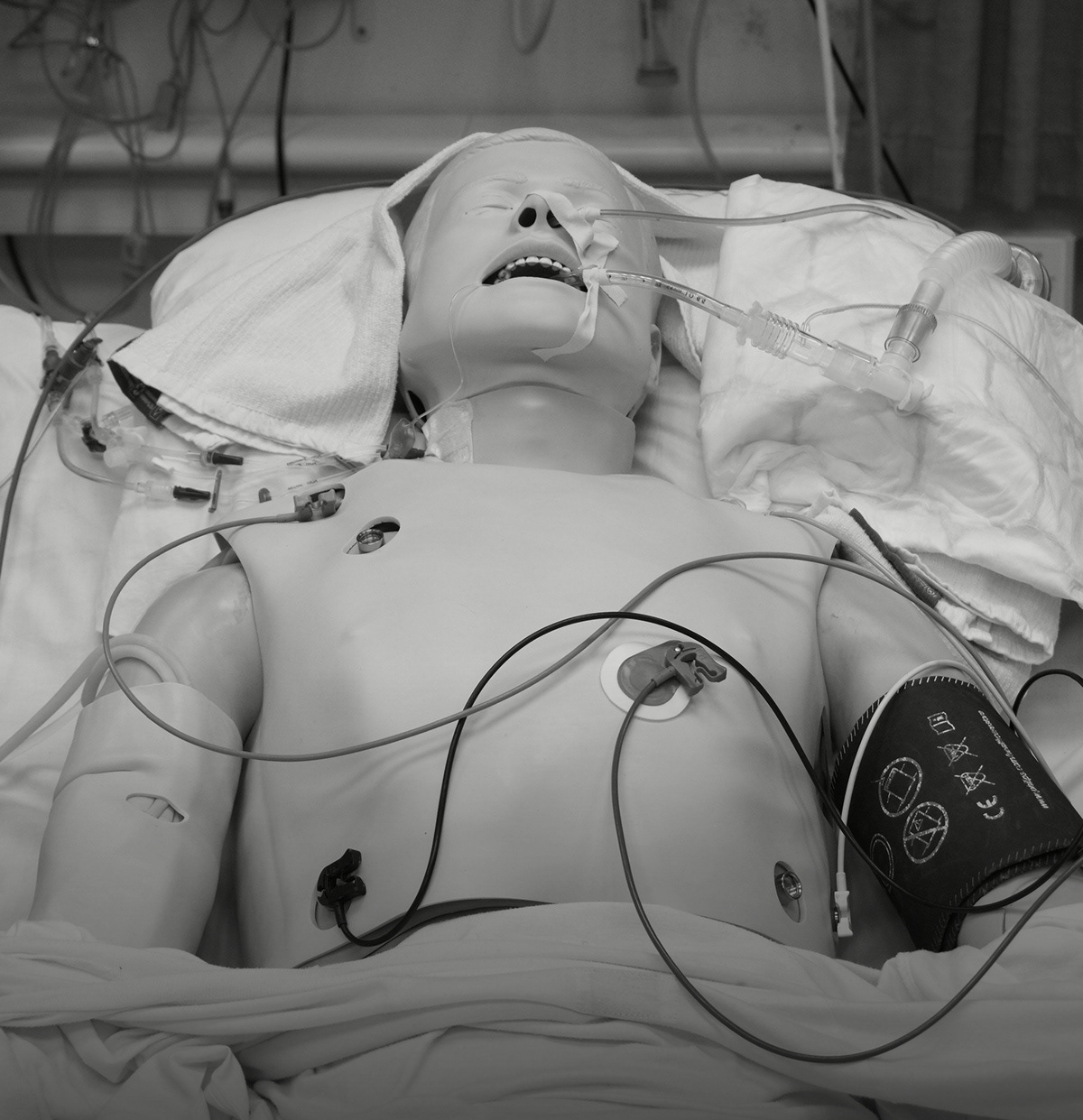
Five individual ECG cables get attached to electrode stickers on the patient's chest. The setup is hard-wired to the monitoring equipment next to the bed and limits the patient's ability to move freely.
ICU Collaboration
Collaboration
with ICU personnel.
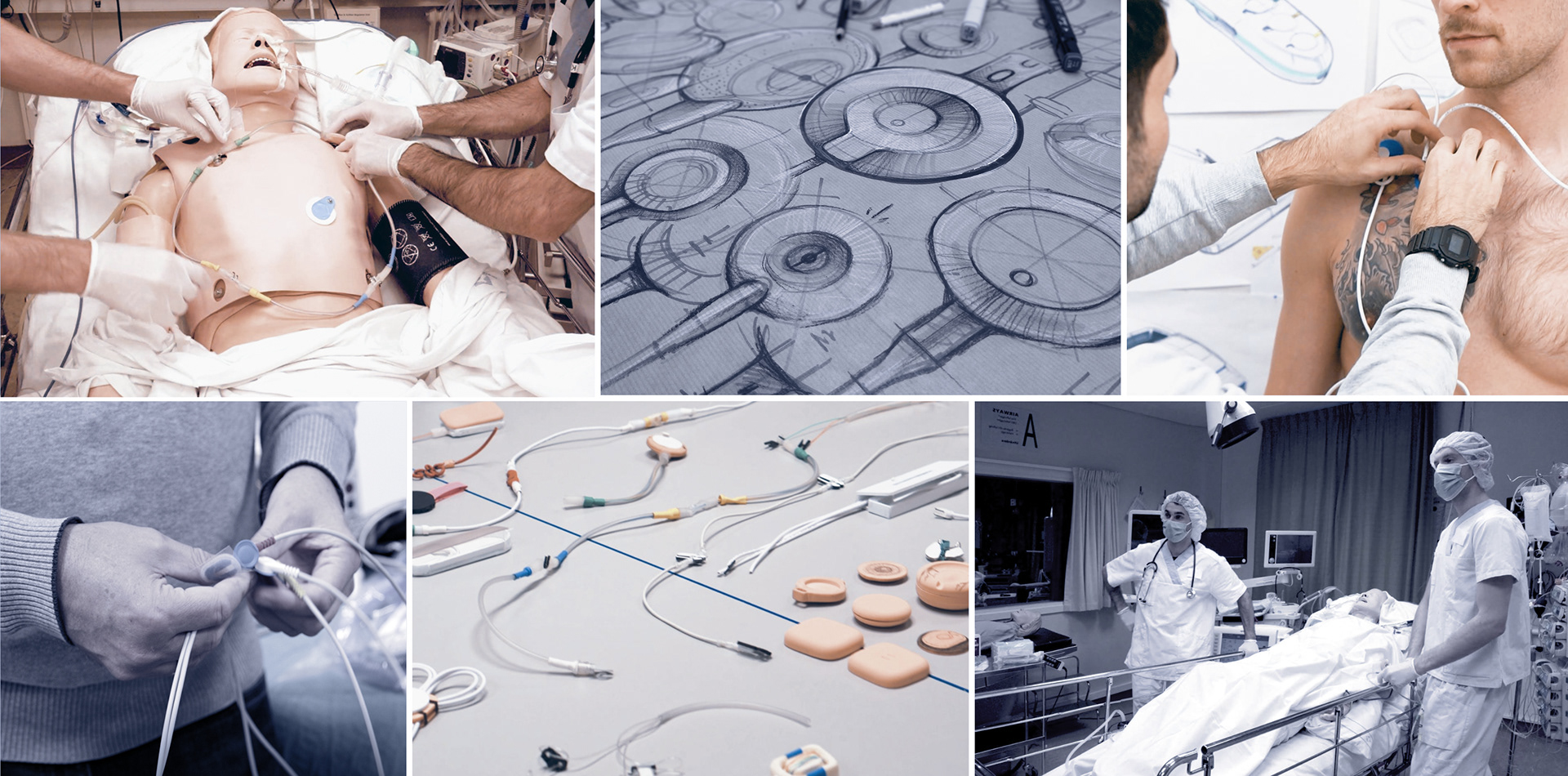
From the very start we received a lot of support from the local hospitla in Umeå. The nurses and doctors in the ICU showed us the current equipment and processes. Throughout the project, they were always available for feedback and guidance.
Medical experts prefer simpler solutions to improve hospital workflows and patient comfort.
Physical Exploration
Prototyping
focused process.
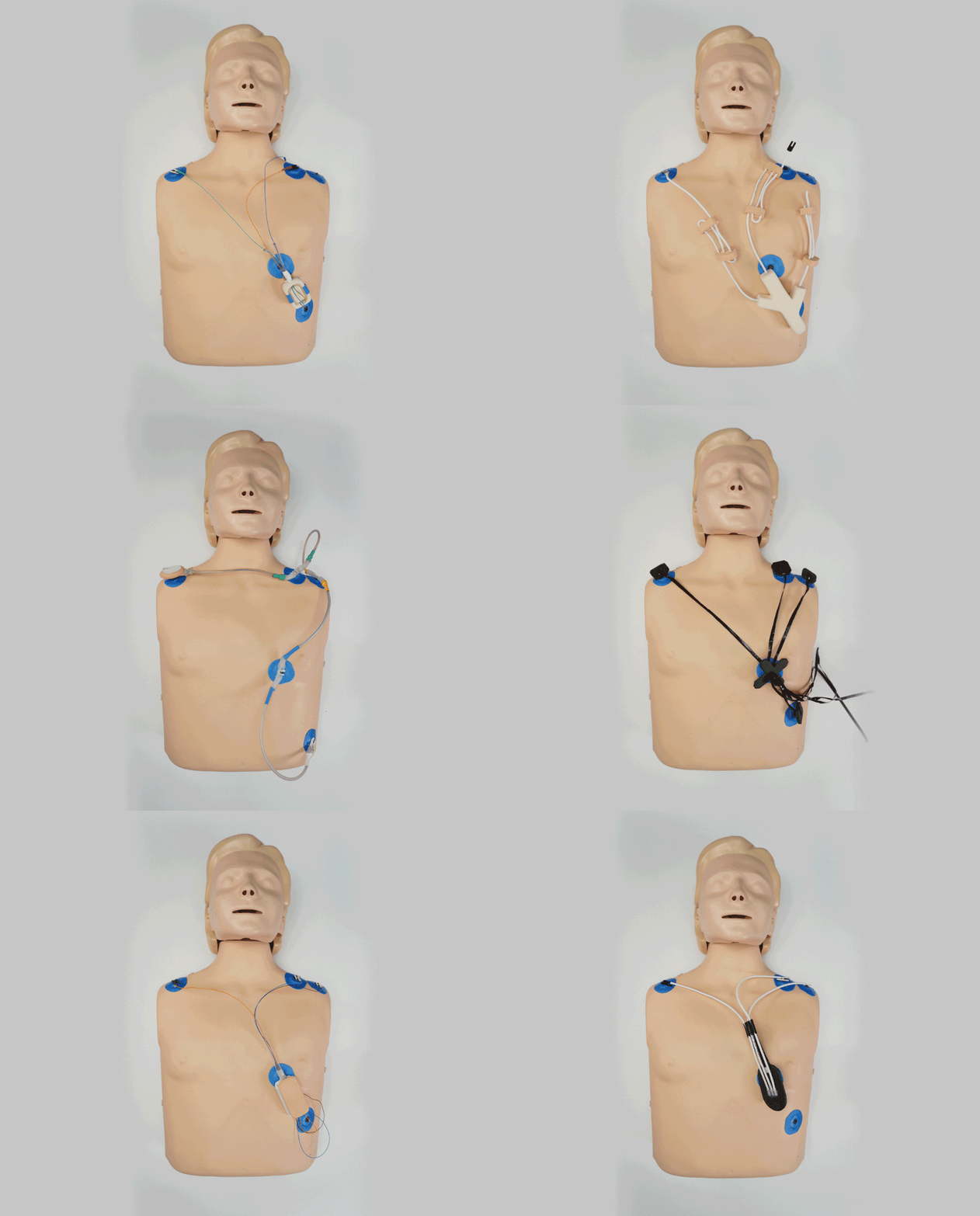
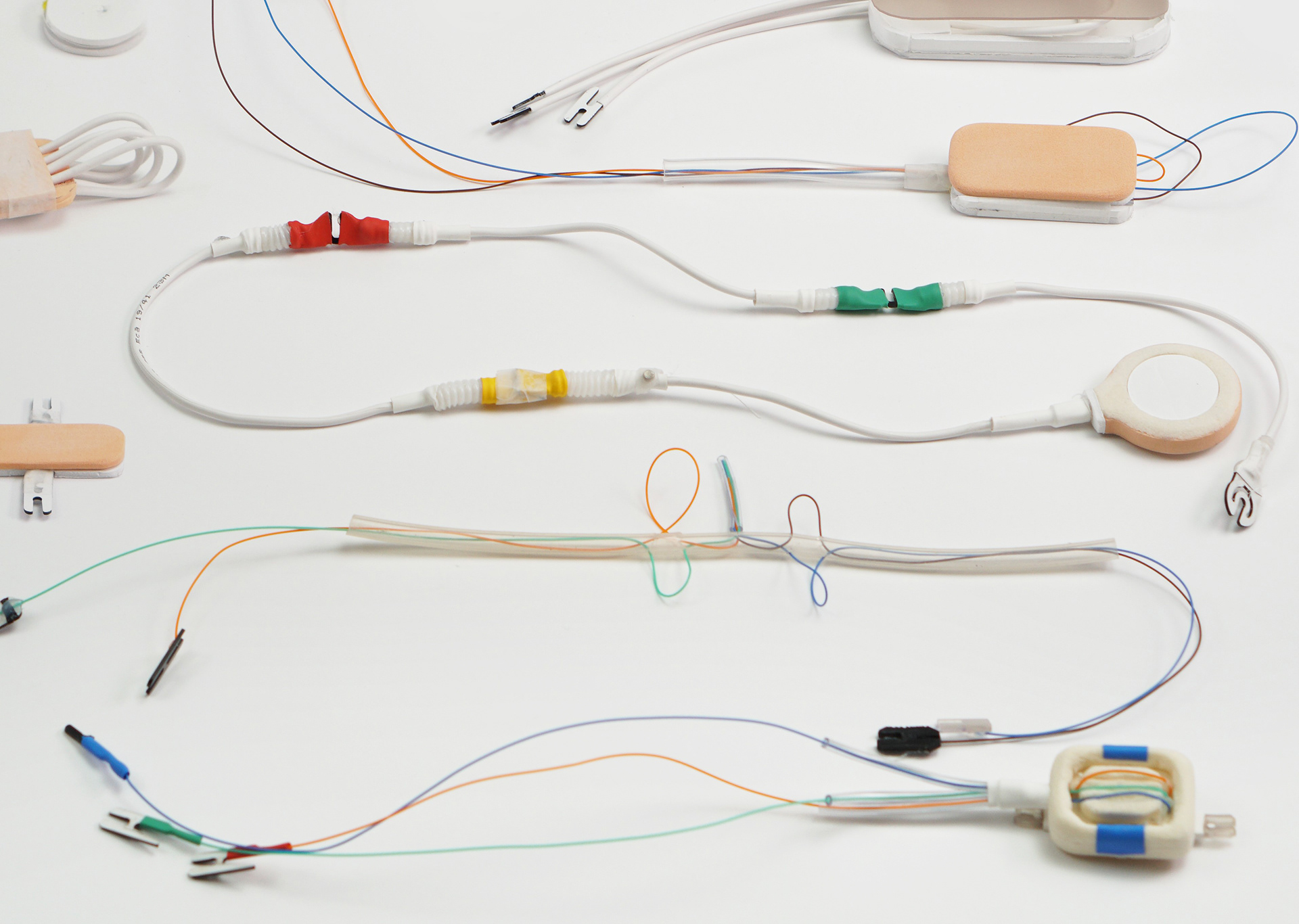
We chose a very physical approach, using very quick mock ups and prototypes that allowed us to explore a vast variety of ideas quickly. Promising directions were sleected and tested with the personnel in the hospital.
Prototyping focused process with subsequent testing and discussion — building, testing and on-site validation with expert users.
Idea evaluation
25+ prototype
iterations.
In total we built and tested over 25 different prototype iterations of product arrangements, adjustment mechanisms and cable layouts. During our evaluations we ranked them based on four key principles: product architecture, patient comfort, cleanability and handling. This way we were able to go from a big pool of promising ideas to one concept direction.
The final direction
The single-line
sensor.
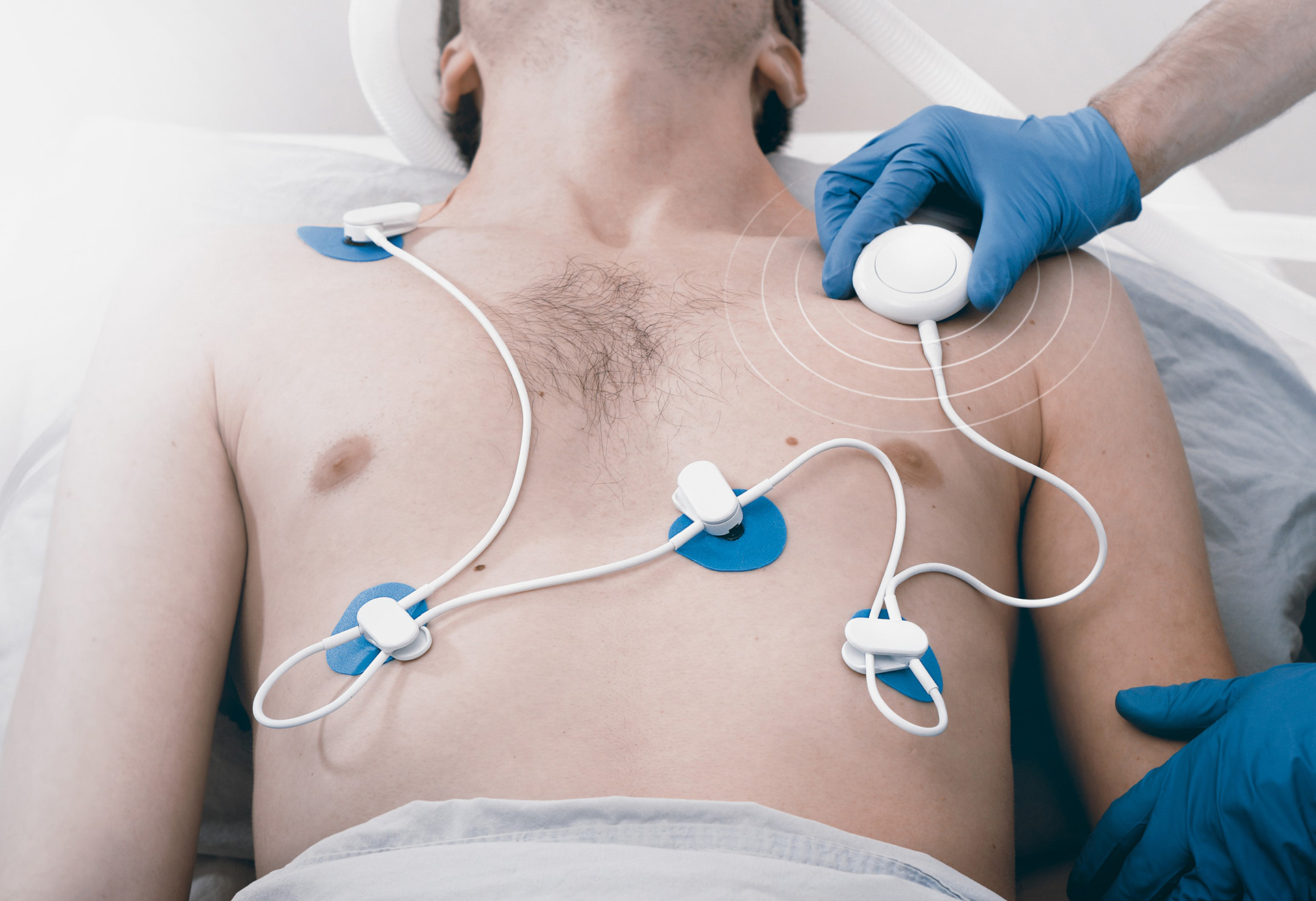
Reducing the amount of cables simplifies the current monitoring setup. The sensor is designed to stay on the human body. Its minimalistic shape is easy to clean, intuitive to handle and declutters the appearance of patients in general. The cable length can be adjusted easily to fit different body shapes, and battery management routines can be integrated into the daily routines of healthcare professionals.
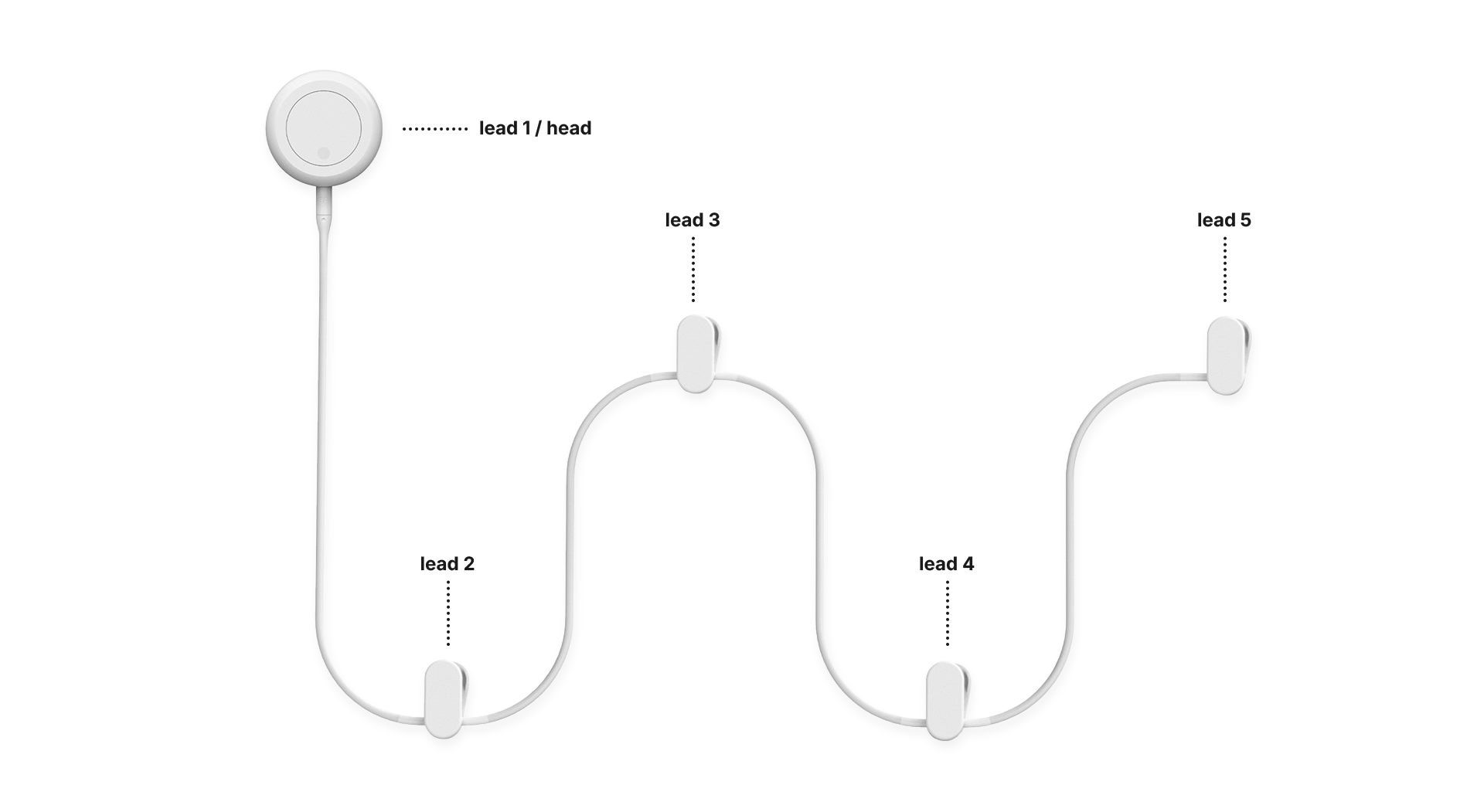
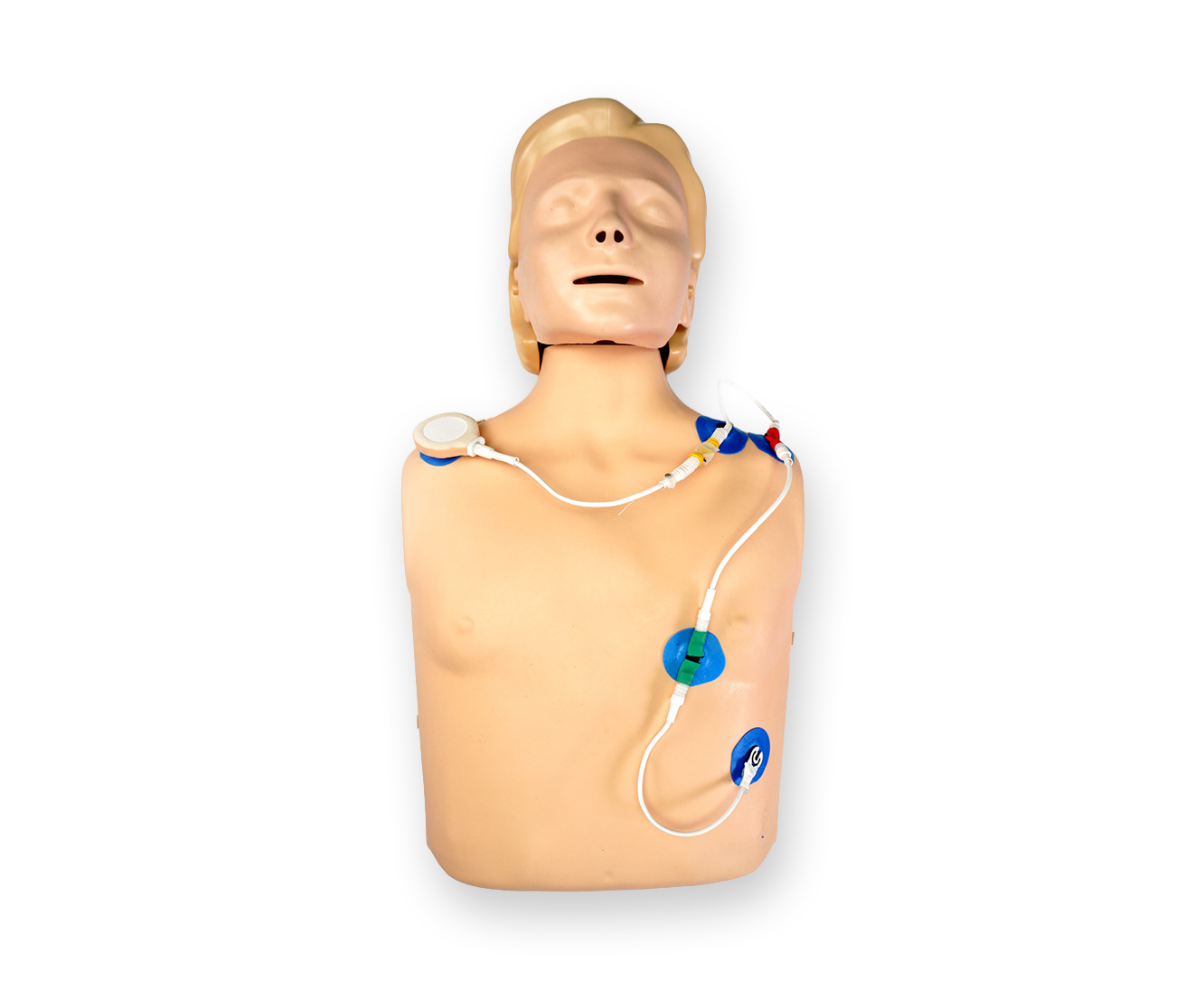
All five contacts in one linear array, and a head unit that transmits wirelessly.
No pressure attachment
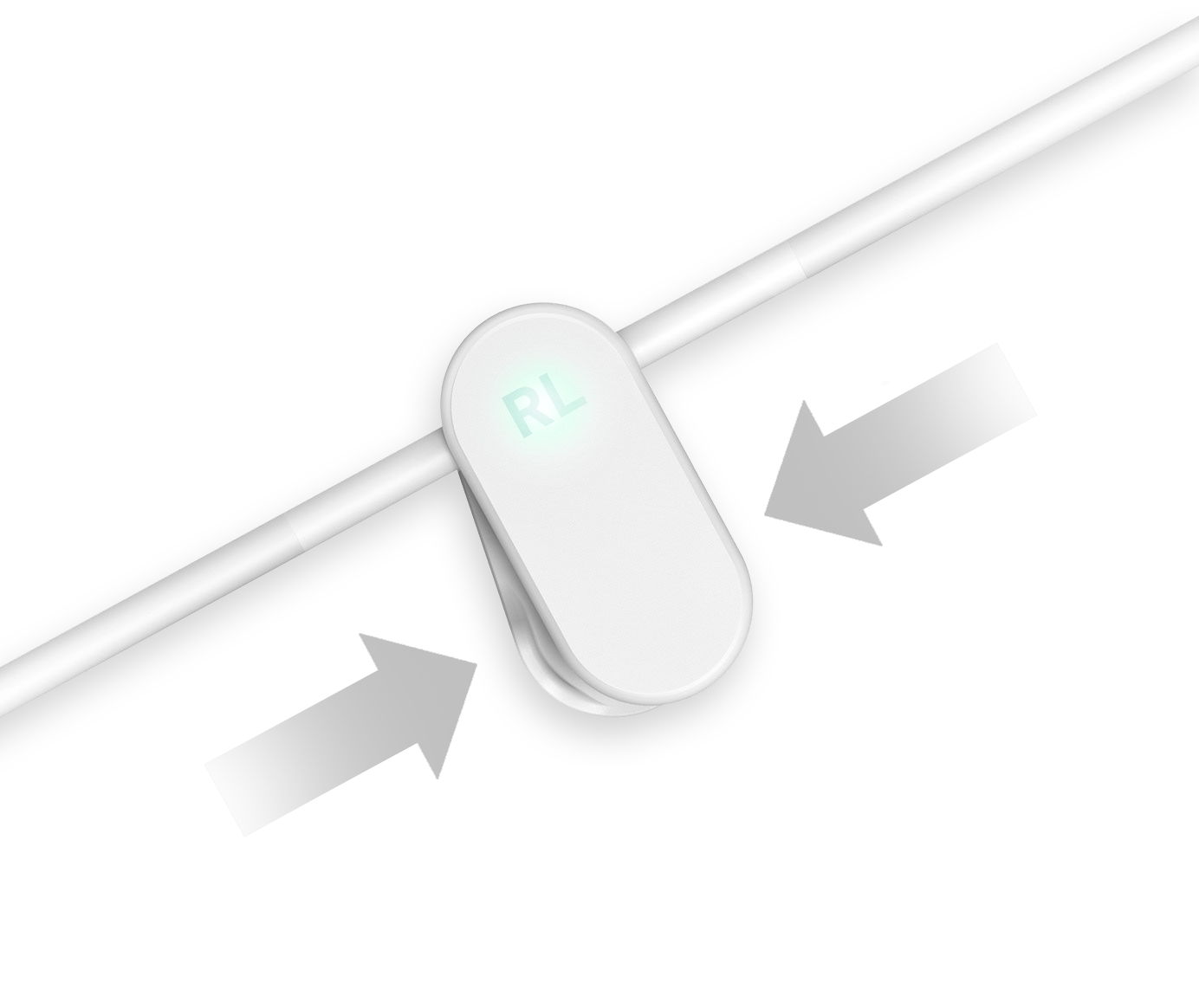
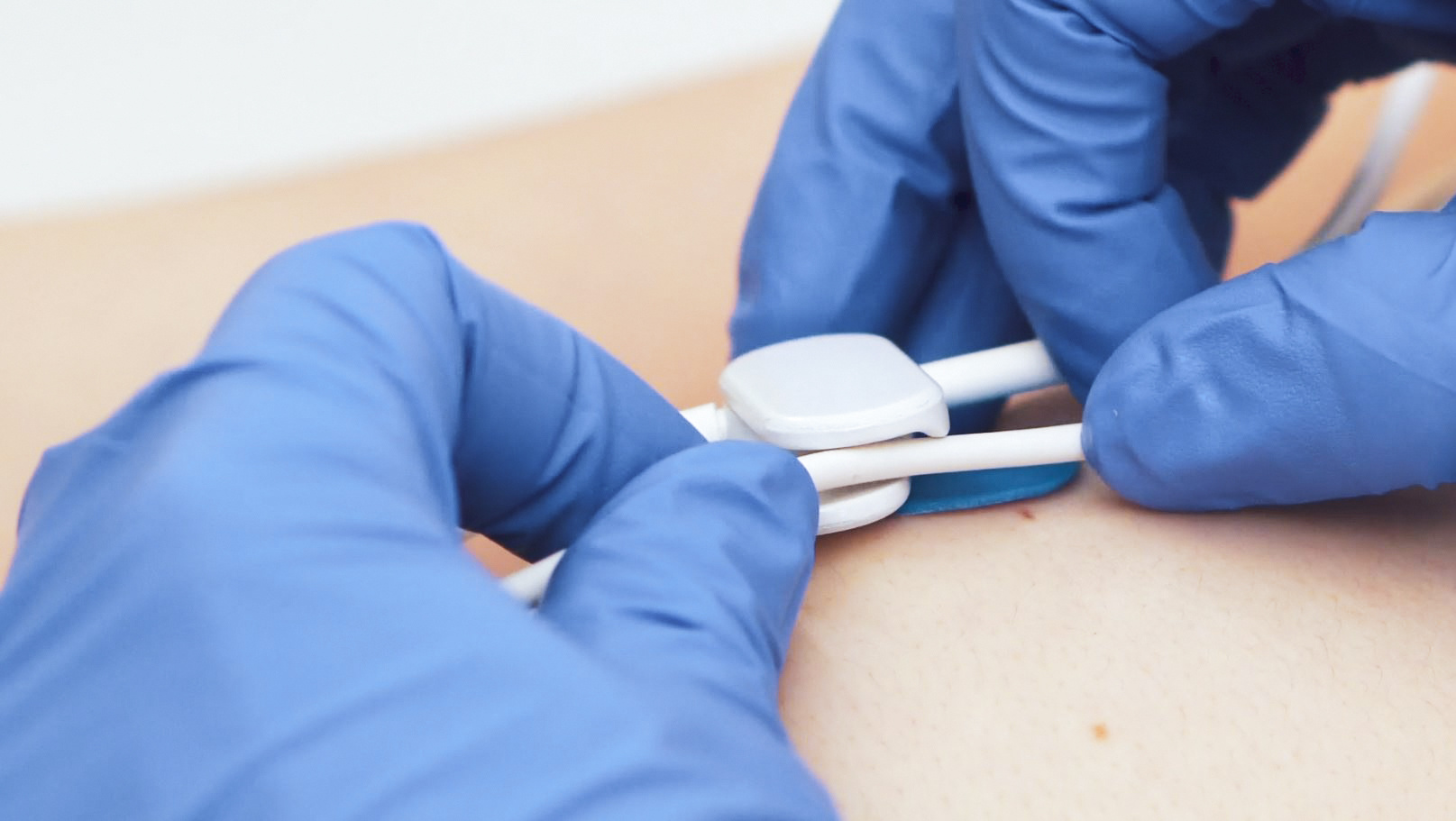
Scissor clips for
easy attachment.
The spring-loaded mechanism enables single-handed and pain-free attachment of the ECG sensors. Colour-coded light feedback gives users orientation during the attachment procedure and lights up when clips come off by accident.
Cable management
Tangle free,
nuisance free.
The sensor is designed to stay on the human body. Its minimalistic shape is easy to clean, intuitive to handle and declutters the appearance of patients in general. The cable length can be adjusted easily to fit different body shapes and battery management routines can be implemented in the daily routines of healthcare professionals.
The head
Easy access.
The head is positioned on the shoulder which makes it accessible for the nurses at all times. It houses the battery, the antenna and a subtle light interface to check its status. Its omnidirectional shape allows for body movements and flexible positioning.
Easy storage
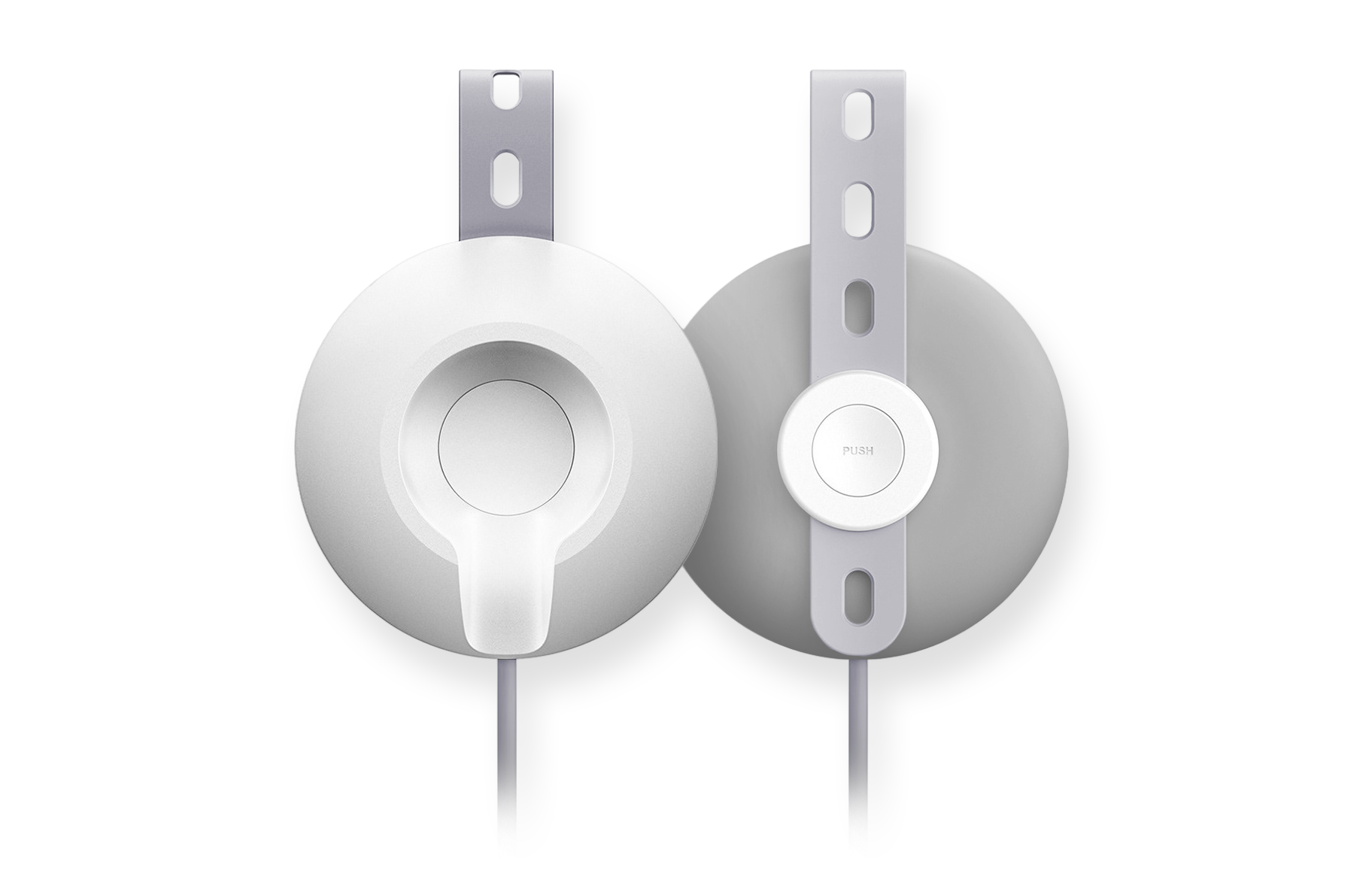
The dock.
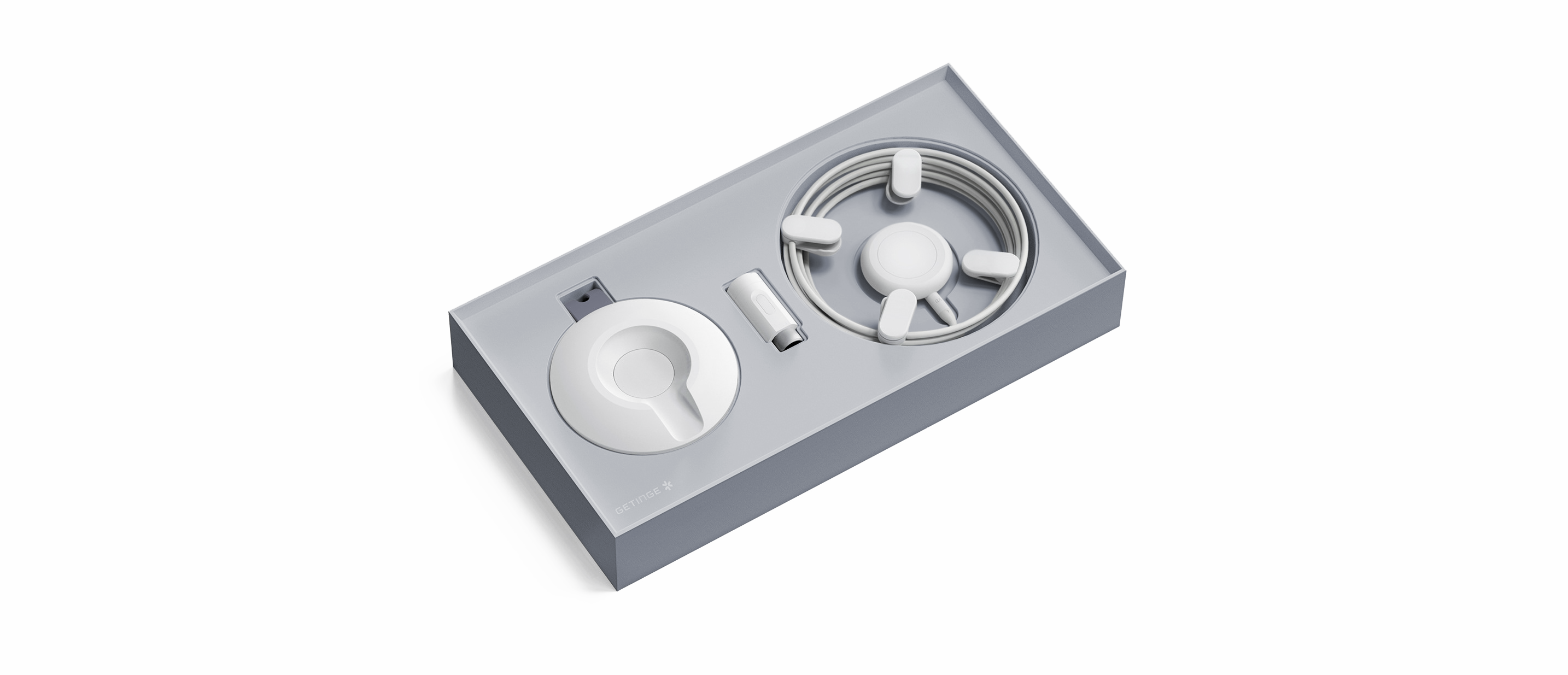
During cleaning or treatments nurses detach the sensor array and place it in the dock mounted next to the bed. The dock houses spare batteries and offers hidden charging that is seamlessly integrated into the nurses' workflow. While stored, the array gets charged simultaneously. The adjustable mounting strap offers flexibility for all intensive care setups.
Benefit of Array
An elegant
single-line solution.
Array reduces the current ECG monitoring setup to an elegant single-line solution that feeds gathered data wirelessly into the patient monitoring system. It helps to streamline the workflow of healthcare workers as they spend less time untangling cables, and offers more comfort and better flexibility in movement for patients.
This group project was created in 2020 as part of the Advanced Product Design Programme at Umeå Institute of Design. The project was carried out in collaboration with Getinge.