One million holes
without heavy
drilling templates.
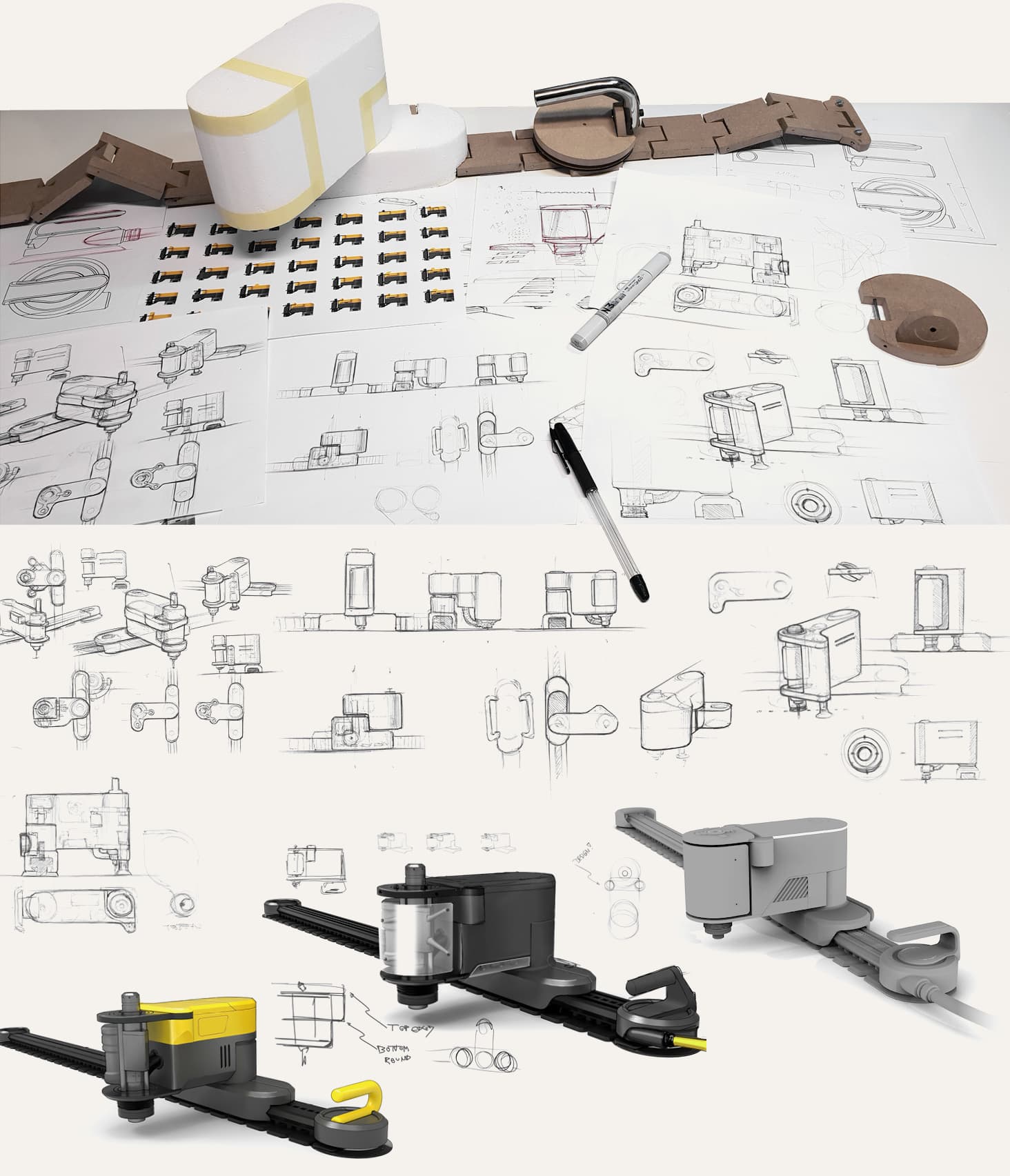
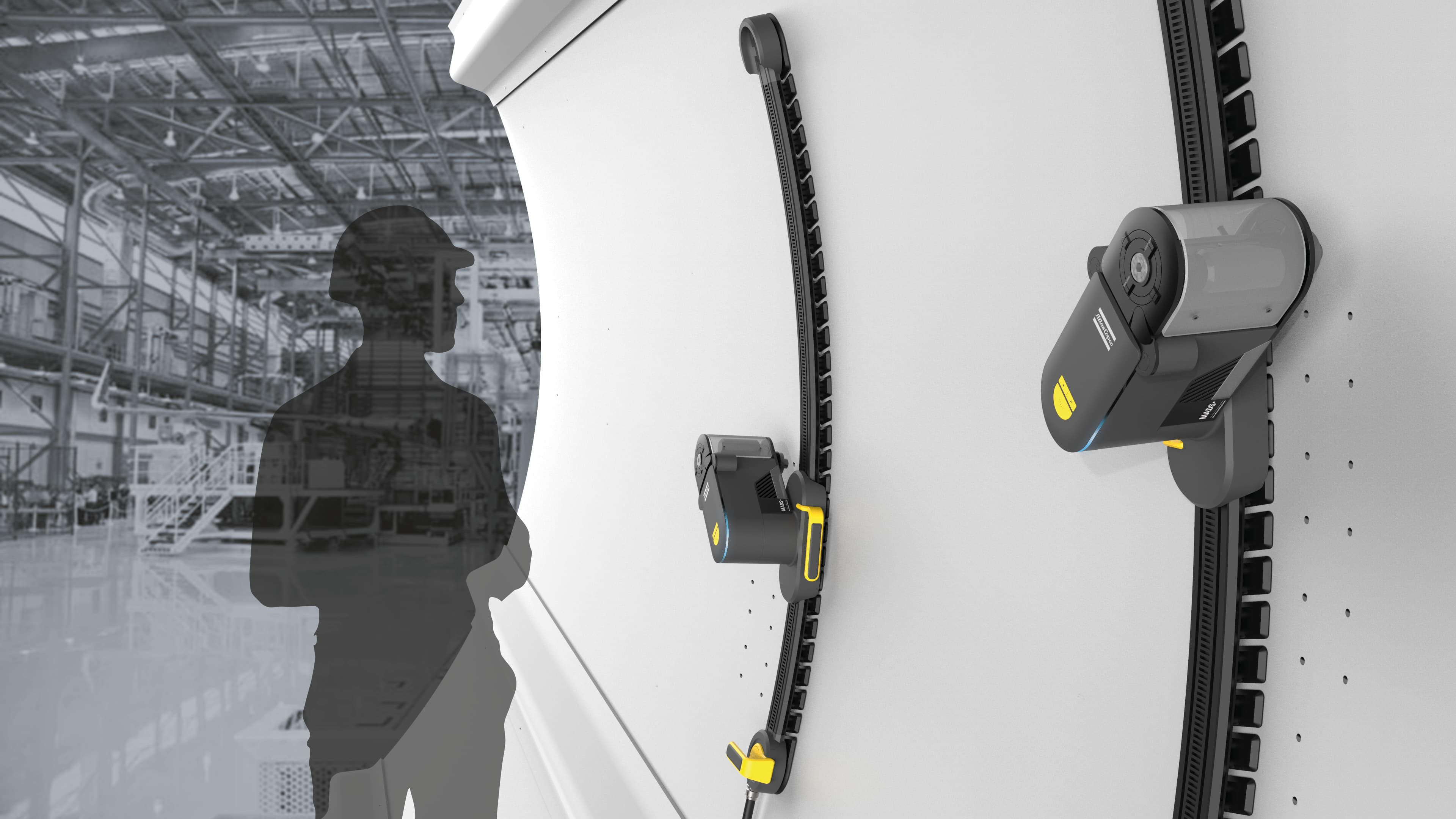
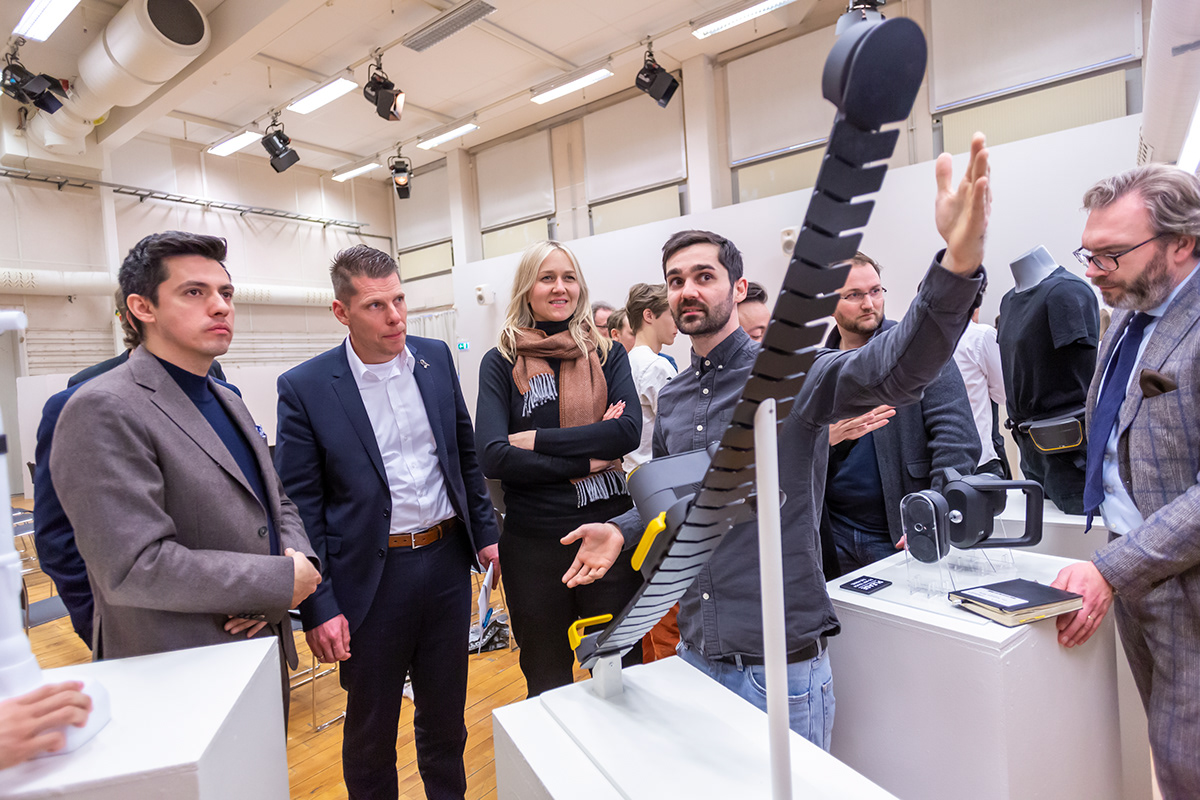
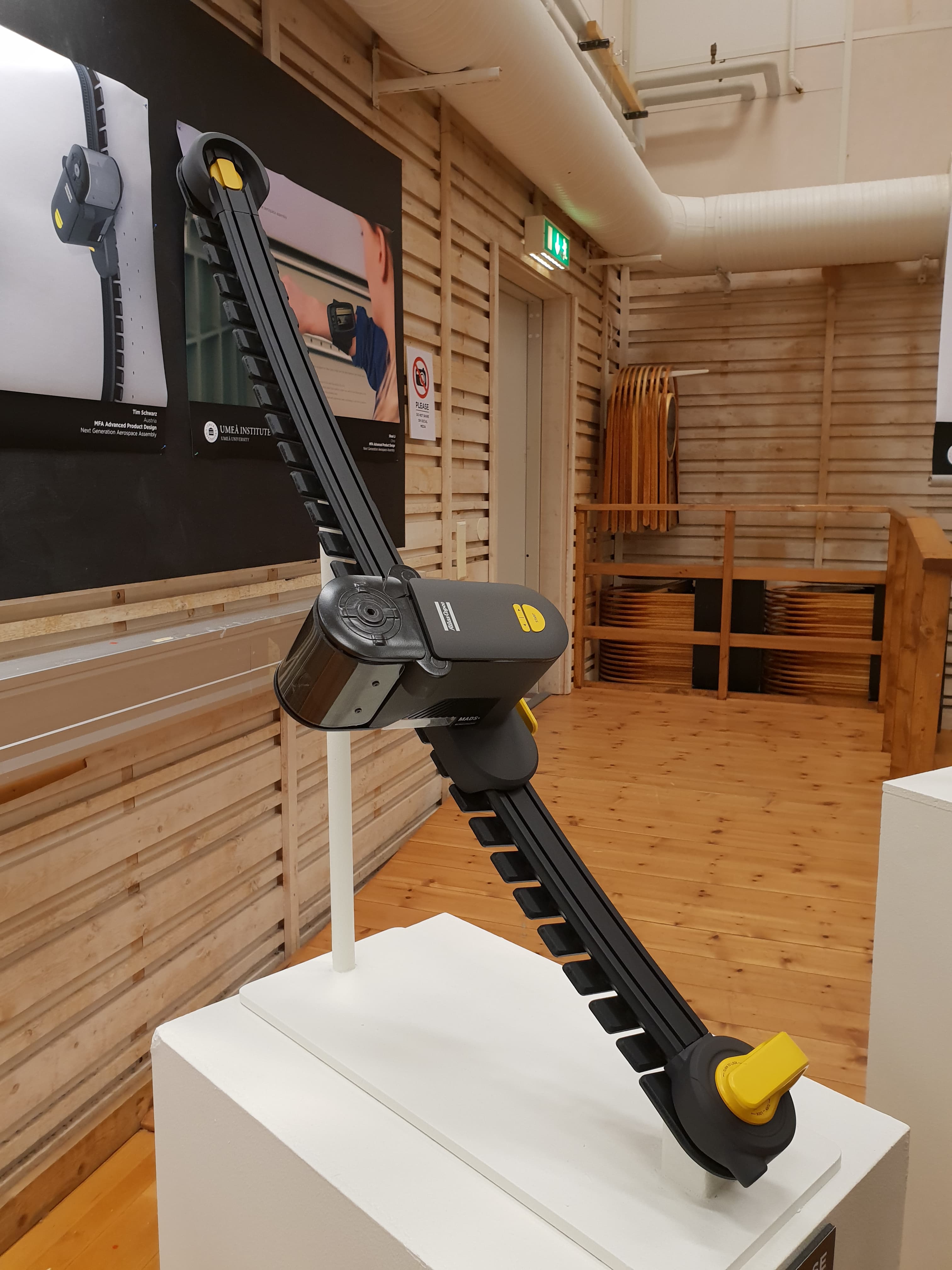
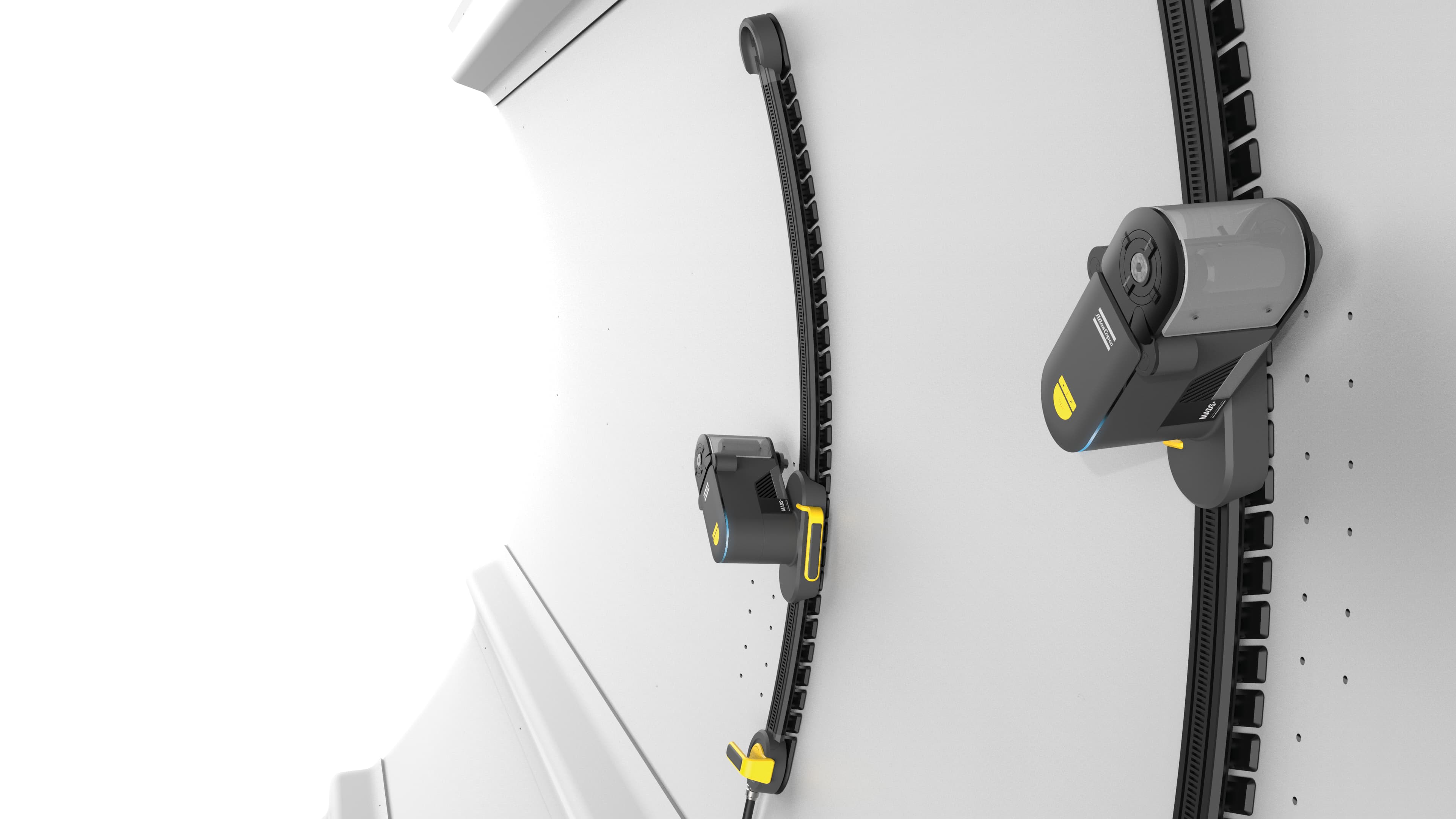
MADS — More Advanced Drilling System — is an autonomous drilling unit that attaches to a flexible rail on an aircraft fuselage, scans existing reference holes using photogrammetry, and drills the remaining million to spec without a single jig. Developed in collaboration with Atlas Copco as a first-semester MFA project at Umeå University's Advanced Product Design Programme.
Role
Industrial Designer
Single Project
Focus
Concept, Form Development
& Model Making
Awards
Red Dot Award 2019
Research
Visiting Airbus in Hamburg
and Atlas Copco in Nacka.
The project started in Hamburg at Airbus's production facilities, where large fuselage sections are joined and the full scale of the drilling challenge becomes immediately clear. From there we travelled to Nacka outside Stockholm to visit Atlas Copco, where we got a detailed look at the aerospace-specific tool they supply to Airbus.
The problem
Up to 50 kg of templates
in the worst possible positions.
When joining aircraft fuselage segments, up to one million holes must be drilled — each meeting strict standards for position, diameter and perpendicularity. Today this is done using heavy metal drilling templates called jigs. Each jig is custom-made for a single location on a single aircraft type, weighs up to 50 kg, must be repositioned for every hole, and represents a significant financial investment. The system is costly, inflexible and brutal on the people operating it.
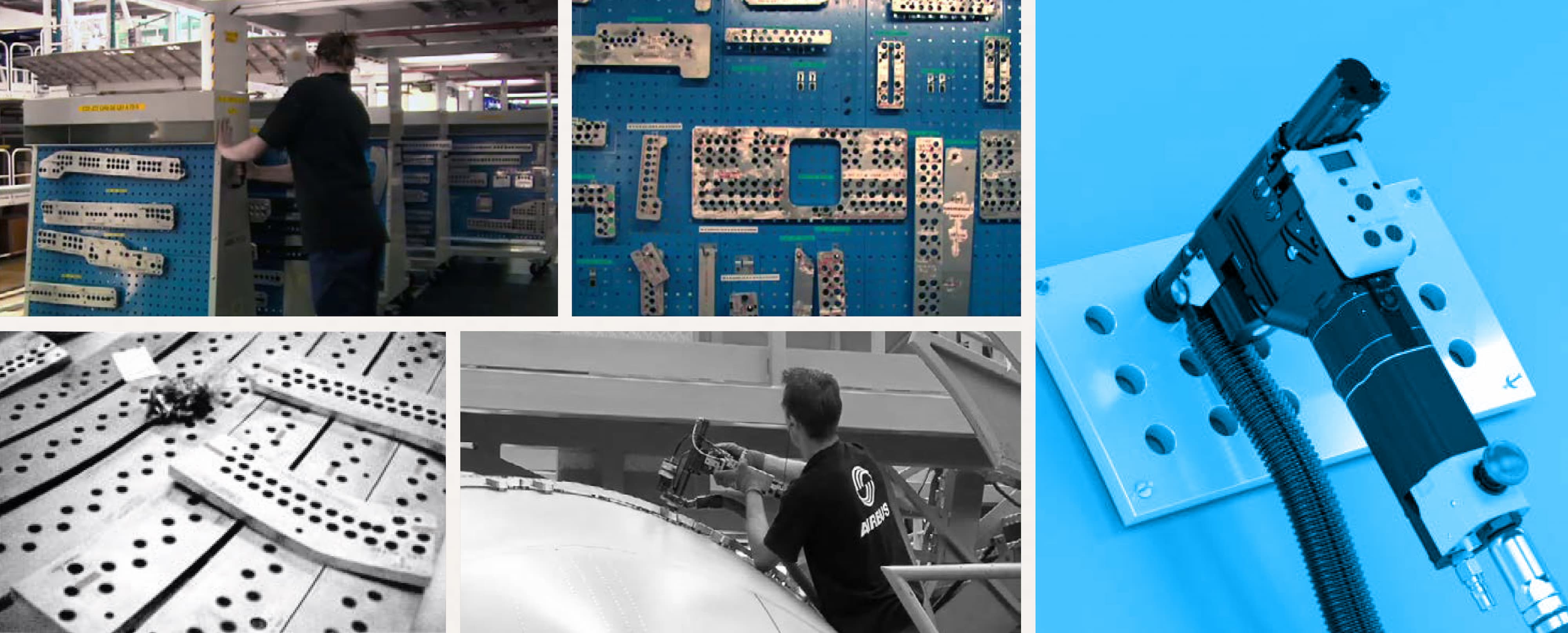
Four compounding problems: weight, cost, constant repositioning and zero flexibility — a different jig for every single spot on the plane.
Benchmark
Two technologies
that pointed the way.
Before generating ideas I mapped existing solutions. Two stood out as direct inspiration: the Flex Track — a large autonomous drilling system that moves on flexible rails along the fuselage exterior — and the Shaper Router, a handheld routing tool with a built-in screen that displays the correct path while its bit auto-corrects for positioning errors. Both contained a key insight worth combining: rail-based autonomy and position self-correction.
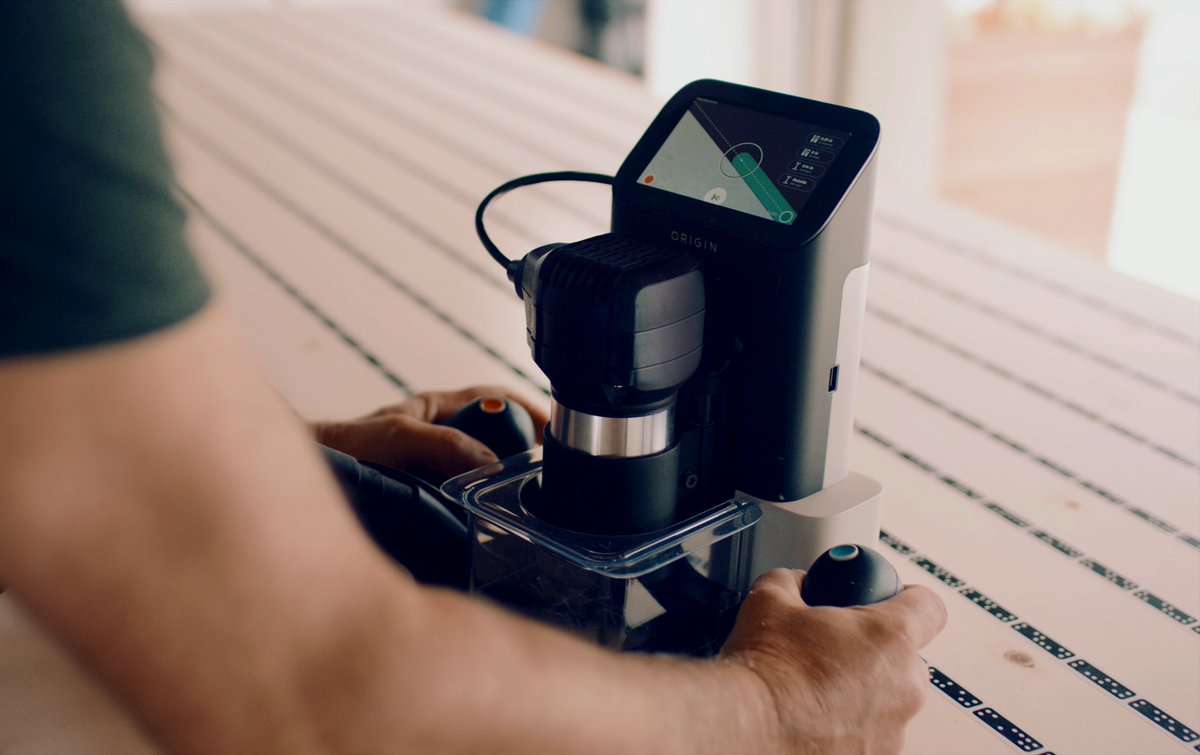
Shaper Origin - Handheld CNC router.
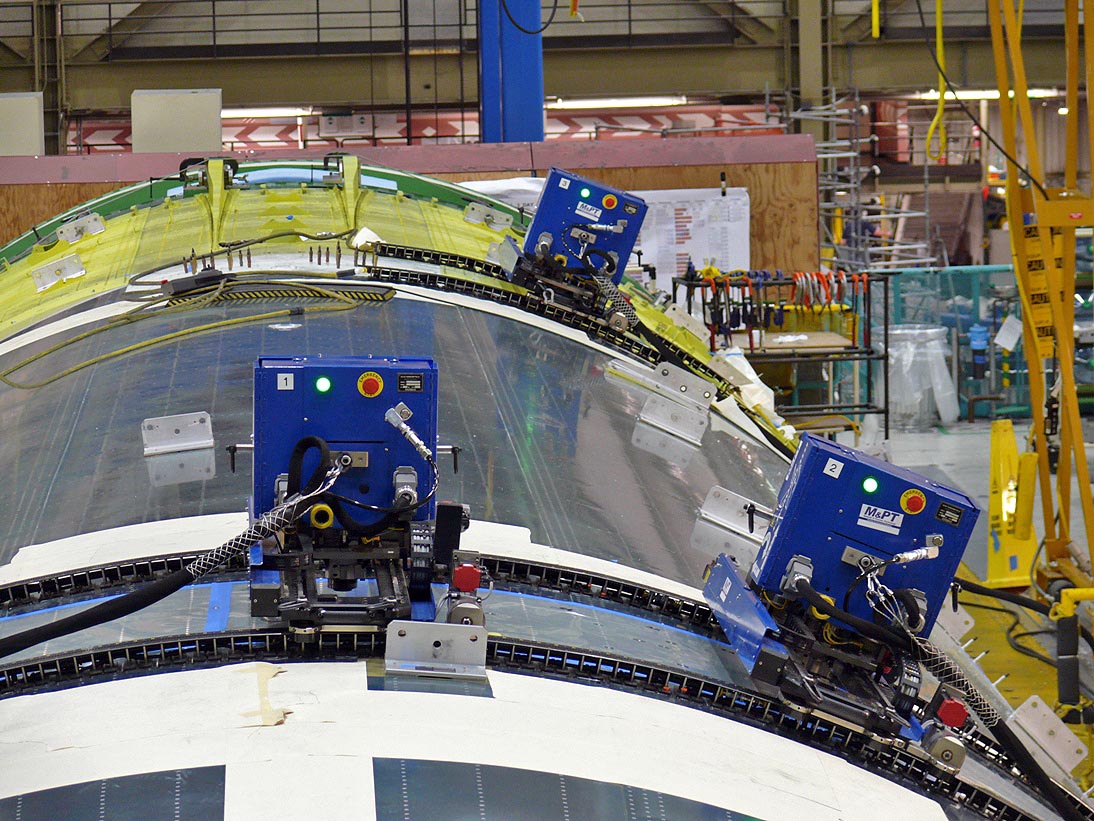
Flextrack - exterior drilling system.
Concept
A portable system
that finds its position
autonomously.
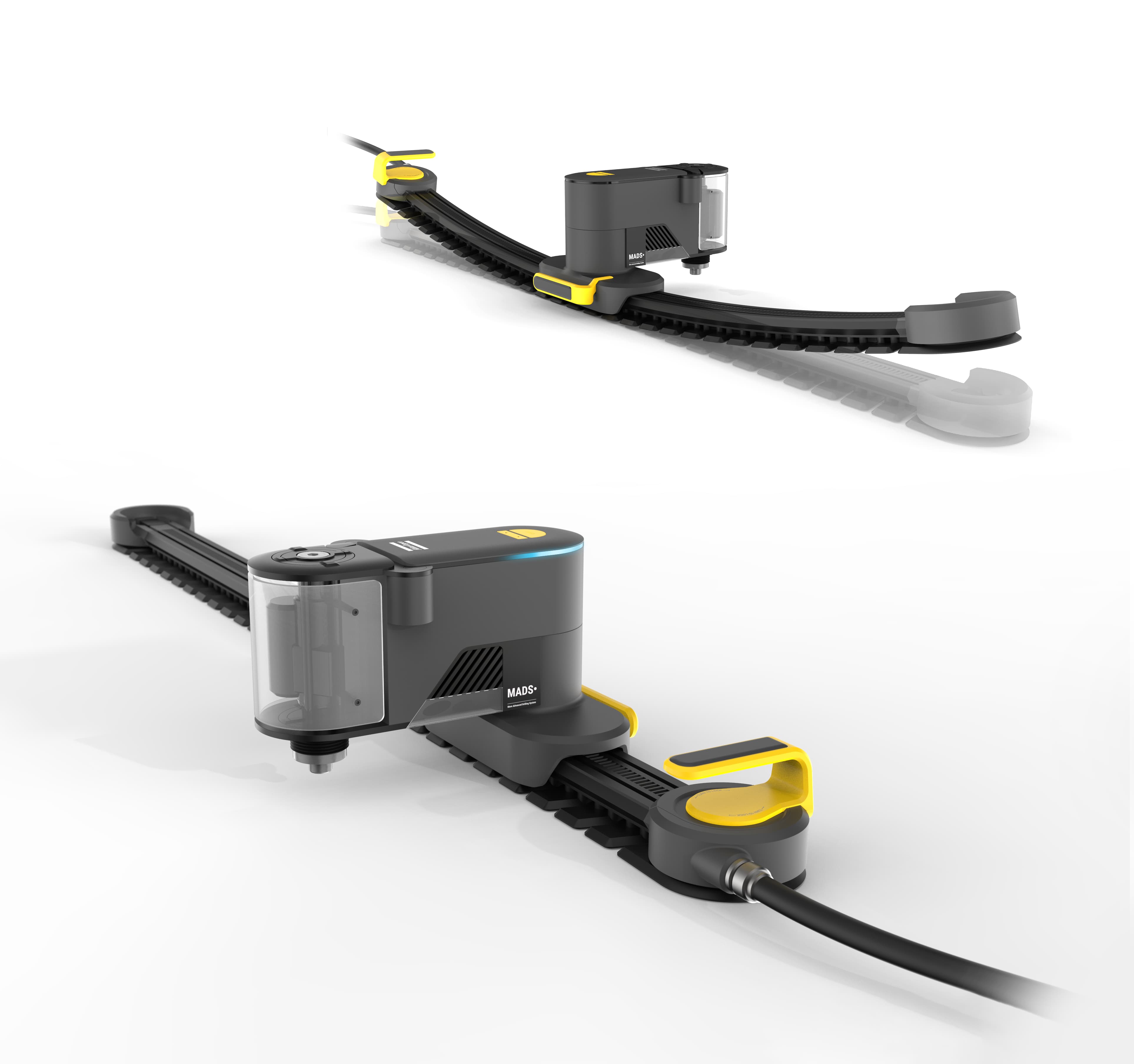
MADS clips onto a lightweight flexible rail that runs along the fuselage. Once attached, it uses photogrammetry cameras to scan existing pre-drilled reference holes, cross-references their positions against the aircraft's 3D CAD data, and calculates exactly where every remaining hole needs to go. The operator doesn't need to position anything precisely, MADS handles that itself. The human sets it up, the machine does the rest.
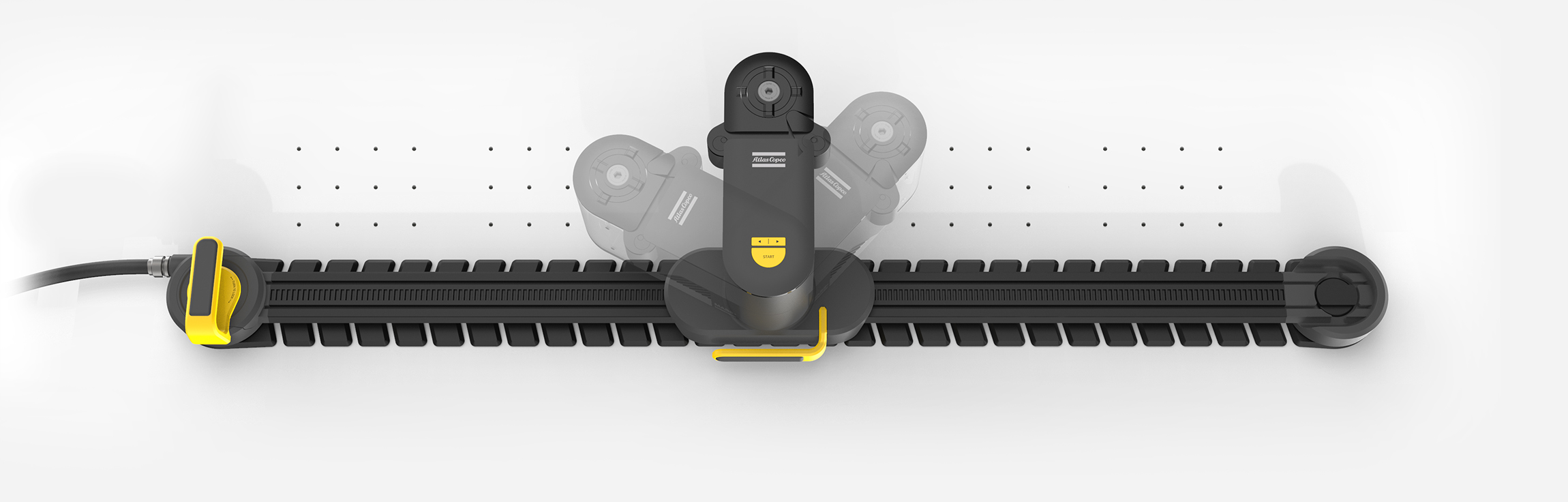
Replacing drill templates with a portable, autonomous drilling system — one that positions itself using photogrammetry and the plane's own CAD data.
Positioning
1½D movement.
Virtual template.
MADS moves in one linear axis along the rail, while a swivelling arm extends its reach to cover all holes within a defined lateral distance — a 1½D kinematic that keeps the system simple and reliable. The drill spindle includes a tilt mechanism using two eccentric pivots (borrowed directly from the Shaper tool concept) that keeps the bit perpendicular to the curved fuselage surface at every position, regardless of the local contour.
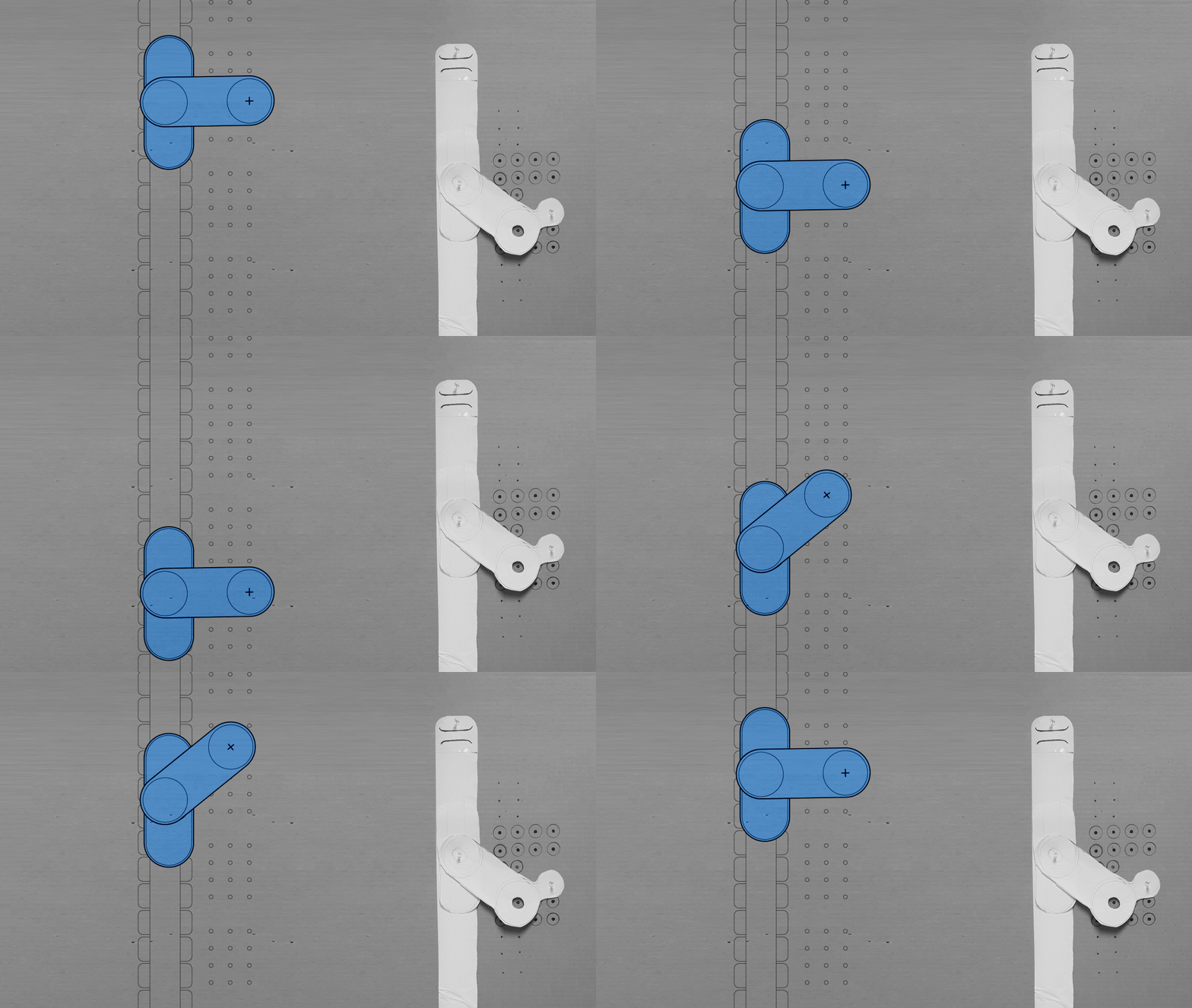
Linear movement with swivelling spindle.
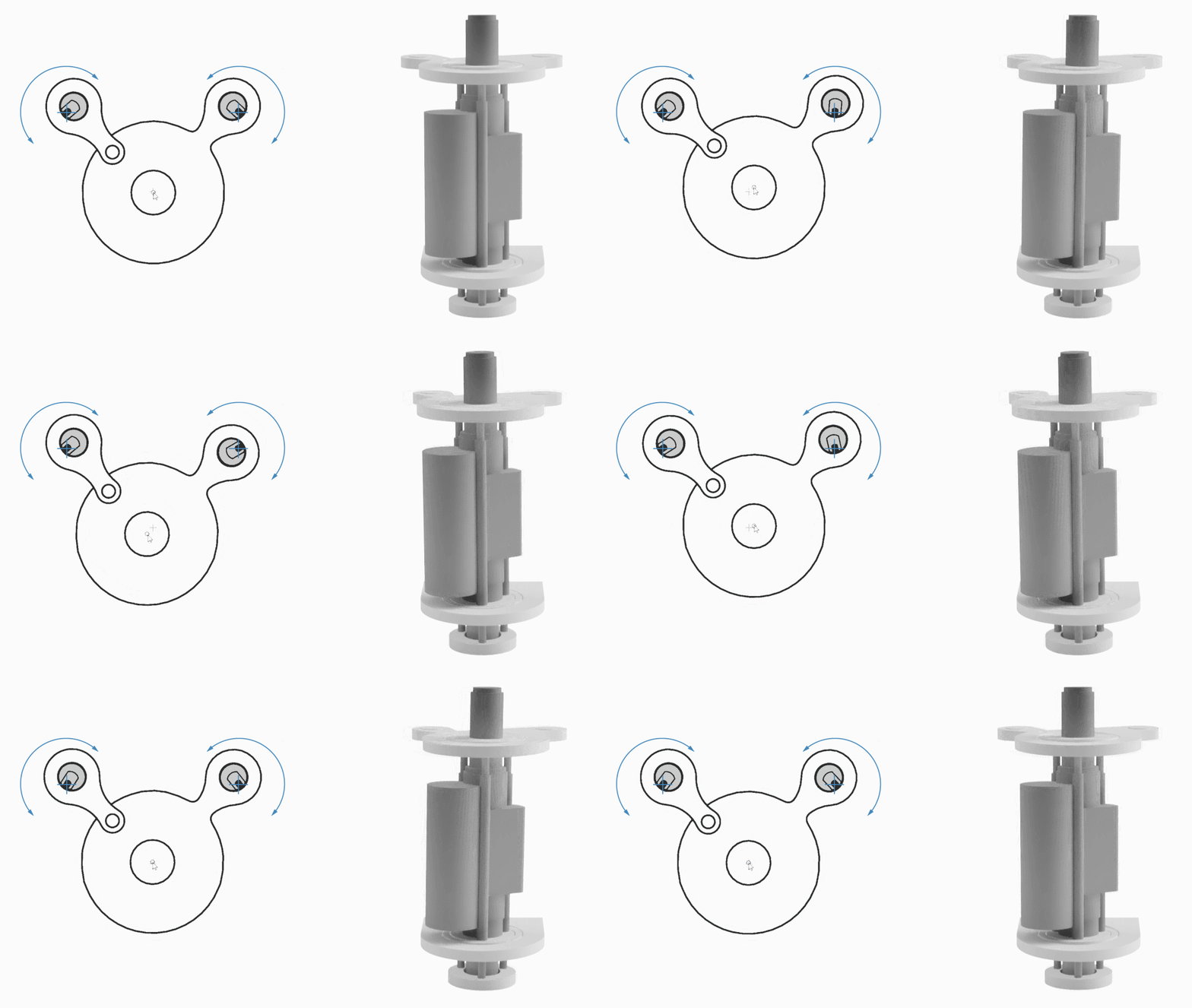
Tilting mechanism to adjust perpendicularity.
Package
Every component
finds its place.
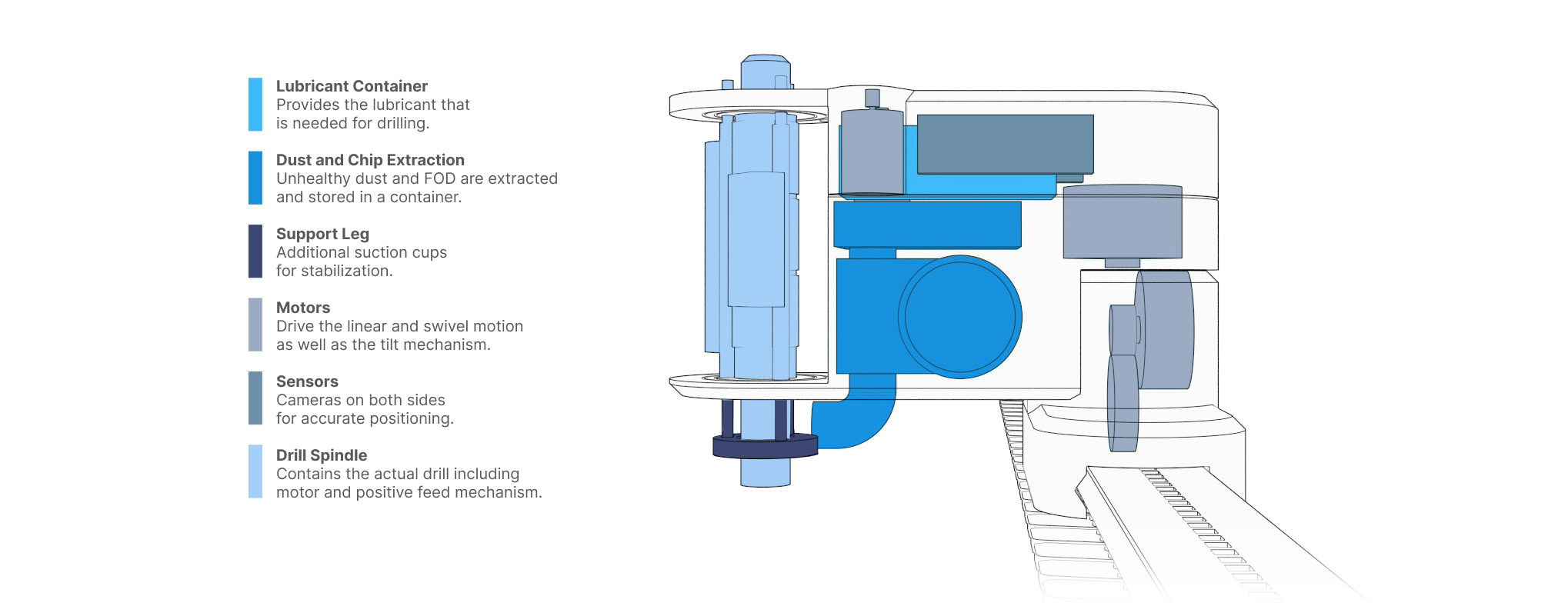
Mapping out the required components early — drill spindle, vacuum pump, chip extraction, sensors, motors — gives the design process a concrete envelope to work within before any form decisions are made.